
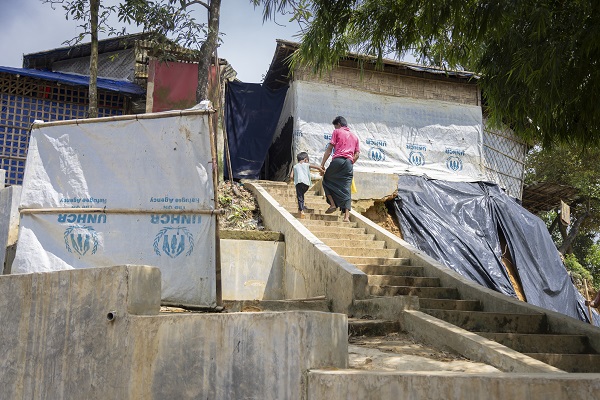
Finland has contributed EUR 2 million to support Rohingya refugees in Bangladesh, strengthening humanitarian assistance and protection efforts led by the United Nations High Commissioner for Refugees (UNHCR).
In a statement, UNHCR said the funding will help sustain life-saving services for Rohingya refugees and address critical gaps in areas such as skills development and resilience-building programmes.
Nearly 1.2 million stateless Rohingya refugees continue to live in Bangladesh almost a decade after fleeing violence and persecution in Myanmar. According to UNHCR, limited livelihood opportunities have left most refugees heavily dependent on humanitarian aid.
Data from 2025 show that only 23 percent of refugee households earned income through cash-for-work programmes, while 35 percent had no income source and relied entirely on assistance. Another 42 percent depended on temporary and unstable sources of income.
UNHCR Representative in Bangladesh Ivo Freijsen welcomed Finland’s increased support, describing it as a significant contribution at a time when the Rohingya response faces declining funding, worsening camp conditions, and rising protection risks.
“Finland’s stepped-up commitment reaffirms our collective responsibility to protect Rohingya families and help them thrive until conditions in Myanmar allow for voluntary, safe and dignified return,” Freijsen said.
Mari Ahmed, Chargée d’Affaires a.i. of the Embassy of Finland in New Delhi, said Finland stands in solidarity with both Bangladesh and the Rohingya people.
“Beyond basic assistance, we must invest in a better future for the Rohingya through skills development, resilience-building and support for the most vulnerable,” she said.
The contribution comes as the United Nations and its humanitarian partners seek renewed international support through the 2026 Joint Response Plan (JRP) for the Rohingya humanitarian crisis. The plan appeals for USD 710.5 million to assist up to 1.56 million people, including refugees and host communities in Bangladesh.
UNHCR noted that sustained international support remains essential to ensure the safety, dignity and well-being of Rohingya refugees until conditions permit their voluntary and sustainable return to Myanmar.





আপনার মতামত লিখুন :